Bottle geometry
Diameter or footprint, height, shoulders, closure overhang, filled weight and compressibility.

Multipack cartoning begins with reliable bottle grouping. The machine must create the exact count and pattern, preserve orientation where required, transfer the group without separation and close the carton around a consistent load.
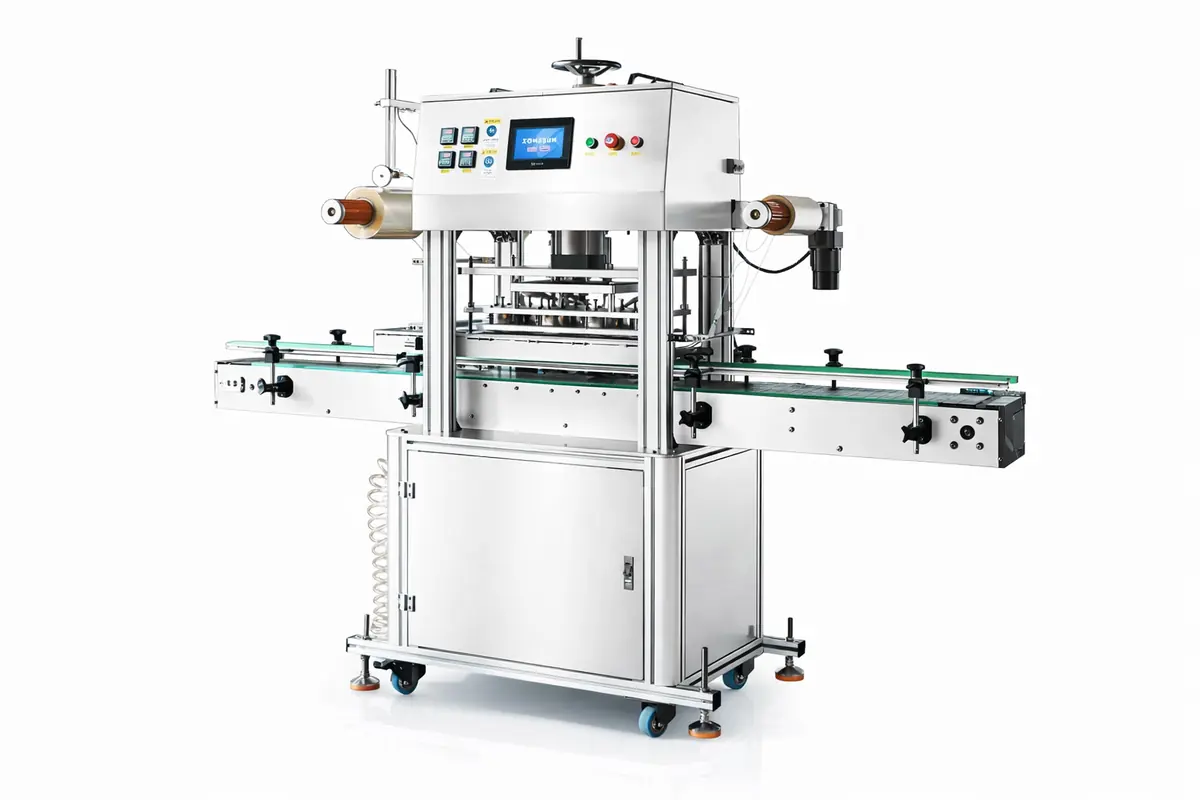
A request for a “six-pack cartoner” is not yet a specification. Six bottles might be arranged 2 × 3, 3 × 2, in one row, in a tray or with partitions. The chosen pattern determines machine width, collation method, carton blank, transfer motion and downstream case packing.
Diameter or footprint, height, shoulders, closure overhang, filled weight and compressibility.
Bottle count, rows, orientation, label-facing requirement, dividers and promotional inserts.
Board grade, internal clearance, dust flaps, locking tabs, glue areas and opening direction.
Required rate, SKU mix, campaign length, changeover time and staffing expectations.
Finished multipacks can feed checkweighing, print verification, tamper evidence, bundling, case packing, case sealing, palletising or manual dispatch. See bottle cartoning line integration for the interfaces that should be agreed at design stage.
Patterns are application-specific. Common arrangements use rows and columns, but stability, carton opening, bottle orientation and downstream handling determine what is practical.
Dividers may be needed for glass, decorated containers, long distribution routes or premium presentation. Their insertion and presence verification add complexity and must be included in trials.
Send your bottle, carton, output and layout details. We will review the application and identify the machine format and integration questions that matter.
In a multipack cartoning machine, group formation is often the process that determines real performance. The cartoner cannot correct an unstable, miscounted or incorrectly oriented collation at the loading station. Bottle lanes, metering, accumulation and group transfer should therefore be designed as part of the machine scope and tested with normal production variation.
Define the pack pattern in rows and columns, identify whether bottles may touch, and show the orientation of closures, handles, labels or decoration. If partitions, dividers, leaflets or pads are required, specify when they are introduced and how their presence is checked. The internal carton fit should leave enough control for loading while still meeting the finished-pack presentation standard.
| Risk | Specification question |
|---|---|
| Lane imbalance | What happens when one product lane is starved while another continues to fill, and how is an incomplete group prevented? |
| Count and pattern | Where is bottle count confirmed, how is pattern position maintained, and what evidence shows that a complete group entered the carton? |
| Product contact | May bottles touch, may closures overlap, and which label or decorated surfaces must be protected during collation and transfer? |
| Dividers or inserts | How are components fed, positioned and verified, and what happens when an insert is missing or incorrectly placed? |
| Blocked discharge | Can a completed group and open carton be held safely, or must the cycle be cleared before the machine can restart? |
Output should be stated in finished cartons per minute together with bottles per carton and the expected product-feed condition. A machine that forms a group of two bottles and one that forms a larger matrix may have very different infeed and recovery requirements even when the finished carton rate is similar. Include every pattern in the format and changeover matrix.
Compare the loading stage with end-load cartoning and top loading. Use the specification checklist to control sample revisions, and define accumulation and line-state signals through the integration guide.
Include bottles per carton, row arrangement, orientation, dividers, carton dieline, target carton rate and a description of the upstream product flow. This provides a realistic basis for the collation and loading concept.
A mixed pack may be possible when each variant is presented, identified and counted reliably. The specification should define the permitted combinations, line-clearance method, wrong-variant detection and the response to a missing lane.
That depends on bottle material, decoration, transport risk and the approved pack design. Trials should use filled products with production labels and closures to assess rubbing, label marking and group stability.
Lane guides, metering, group stops, transfer tooling, carton handling, inspection settings and recipes may all be affected. Each pattern should have a defined change-parts list and first-off approval procedure.
State finished cartons per minute and bottles per carton, together with the assumed upstream feed condition and inspection steps. This avoids comparing a headline bottle rate with a finished-pack requirement.
A multipack cartoner cannot correct an unstable or incomplete bottle group after it has entered the loading cycle. Define how the group is counted, aligned, contained and released, and how the machine responds when one bottle is late, fallen, damaged or outside the approved presentation.
| Process point | Evidence to establish |
|---|---|
| Group formation | Pack count, row pattern, bottle orientation, spacing and the normal variation created by upstream accumulation. |
| Containment | Guides, lanes or transfer features that hold the group without damaging labels, closures or bottle surfaces. |
| Loading | Carton opening, flap clearance, product-to-carton clearance and the accepted transfer contact points. |
| Fault handling | Detection of incomplete groups, unopened cartons and blocked discharge, including what is rejected and how recovery is controlled. |
| Finished pack | Bottle count, orientation, label presentation, panel condition, closure and any code or inspection requirement. |
Use the inspection and reject guide to define pack tracking and rejected-group control. Include incomplete-group and restart challenges in the acceptance plan, and use the troubleshooting guide when intermittent jams or false rejects occur.
Share each pack pattern, the upstream presentation and the accepted carton arrangement so the collation and loading sequence can be reviewed together.
Send the bottle range, pack patterns, carton blanks and upstream feed details for a controlled application review.